Why basements leak in Auckland
Auckland basements are often built in concrete block or poured concrete, partly or fully below ground, with backfilled soils that hold a lot of water after heavy rain. When that soil becomes saturated, hydrostatic pressure pushes water against the walls and slab, forcing it through cracks, joints, and weak points in old coatings.
Common root causes include:
-
Poor exterior drainage (no subsoil drains, blocked novaflow, flat ground around the house, downpipes discharging at foundations).
-
Inadequate or failed waterproofing on basement walls and floors, especially in older homes where damp-proof coatings have broken down.
The key to a lasting repair is to identify which of these is doing most of the damage, then design work that actually relieves pressure and blocks the water path, not just hides the symptoms.
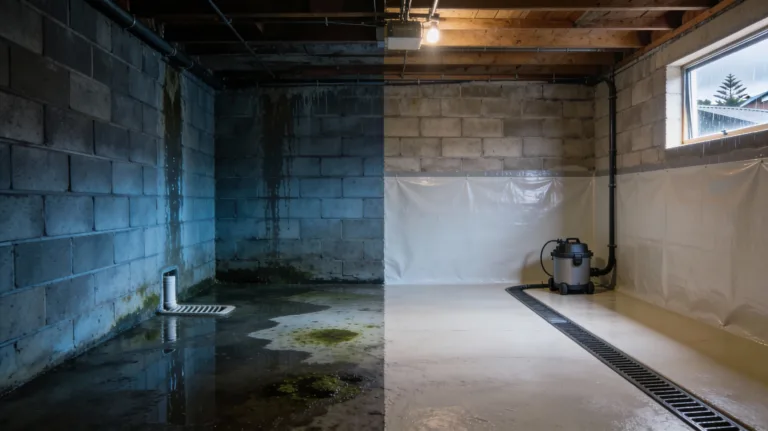
What drainage fixes actually do
Drainage fixes focus on controlling how water moves around and away from your house rather than sealing the structure itself. Done properly, they are powerful tools—but only for the right type of problem.
Typical drainage solutions around Auckland basements include:
-
Subsoil drains (novaflow) at footing level beside or behind basement and retaining walls to lower the water table and relieve pressure.
-
Surface drainage and landscaping fixes such as regrading ground levels, adding channel drains, and ensuring downpipes discharge to stormwater, not at the base of walls.
These measures can reduce or stop leaks caused mainly by water pooling and high groundwater levels, but they do not waterproof the wall itself. If the wall membrane has failed or there are structural cracks, water will still find a way in once pressure builds up, even with new drains.
What basement waterproofing actually does
Basement waterproofing aims to create a barrier to water and manage any moisture that still gets into the system. In Auckland, that usually means a mix of exterior and/or interior systems depending on access, budget, and how severe the leak is.
Common methods include:
-
Exterior waterproofing: Excavating down to the base of the wall, cleaning and preparing the block or concrete, applying a professional-grade waterproofing membrane, then backfilling with drainage metal and installing subsoil drains. This is the gold standard when access allows because it stops water before it gets near the wall.
-
Interior waterproofing: Applying internal waterproof coatings, installing cavity or channel systems at the wall–floor junction, and fitting sump pumps to safely remove water that enters behind the system. This is widely used where exterior excavation is not practical.
-
Crack and joint repairs: Injecting epoxy or polyurethane into cracks and cold joints to seal active leak paths before or alongside membrane work.
On their own, interior coatings or crack repairs can be effective for minor seepage, but for high-pressure, recurring leaks they work best when tied into a wider waterproofing and drainage strategy.
Basement waterproofing vs drainage: which solves leaks?
In practice, the choice is rarely “waterproofing or drainage”—the most durable fixes blend the two. What actually solves leaks depends on what is found in inspection.
Typical scenarios in Auckland
-
If the main problem is ponding water and blocked subsoil drains, new drainage and improved surface falls can dramatically reduce water pressure and may resolve minor dampness without major wall work.
-
If water is streaming through cracks, joints, or a visibly damp block wall, structural repairs and waterproofing are essential, with drainage upgrades added so the new system is not overloaded in big storms.
-
On steep or high-groundwater sites, exterior waterproofing plus subsoil drainage gives the strongest long-term protection because it both blocks water and gives it a controlled escape path.
For homeowners, the risk in choosing drainage-only “fixes” is that they can mask symptoms temporarily while the wall continues to deteriorate behind paint or plaster. A waterproofing-only approach, without considering drainage, can also fail if pressure and flow are simply too high for the system to cope with.
How A Plus Waterproofing approaches leaky basements
A Plus Waterproofing focuses on diagnosing the root cause first, then recommending a staged plan that balances risk, budget, and access on Auckland homes. Rather than pushing a single product, the aim is to design a system that keeps the basement dry, protects the structure, and supports future use of the space.
A typical process includes:
-
Full inspection of basement walls, floor, retaining walls, and surrounding drainage to determine whether leaks are primarily a waterproofing issue, a drainage issue, or both.
-
Designing a combination of crack repair, interior or exterior membranes, and suggesting drainage improvements (subsoil drains, surface drainage, gutter/downpipe corrections) that work together under Auckland rainfall patterns.
If you are planning to renovate or convert a basement into living space, getting this design right up front can save major rework, mould issues, and structural repairs later, while also protecting the value of the property in Auckland’s competitive market.