Deck Waterproofing in Auckland: Common Leak Causes and How A Plus Waterproofing Fixes Them
Decks in Auckland take a hammering from rain, UV and foot traffic, so when the waterproofing fails, leaks show up fast in the rooms below. This post explains the most common causes of deck leaks – and how A Plus Waterproofing fixes them properly so they stay watertight.
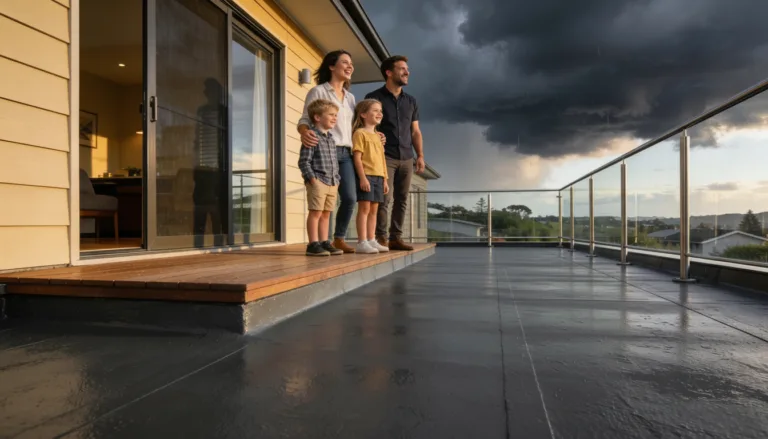
Understanding deck waterproofing in Auckland
Auckland’s climate means exposed decks and balconies are almost always at risk of water getting through to living spaces, garages or basements underneath. When the waterproofing system is poorly designed or installed, even small faults can turn into stained ceilings, swollen gib and rotten framing.
At A Plus Waterproofing, the focus is on membrane systems that turn a deck into a fully watertight surface, with options like torch-on, rubber and trafficable vinyl depending on the situation. Done right, the deck is both usable and fully protected, even in very wet years.
Common causes of leaking decks
1. Poor deck design and falls
Many leaks start at the design stage, before a single layer of membrane goes down. When the deck doesn’t have enough fall, water sits and slowly finds its way through tiny weaknesses. Over time, ponding accelerates wear on the membrane and increases the risk of leaks at joints and outlets.
Good waterproofing design builds in sufficient falls to drains or gutters, compatible substrates and correct edge details so water is always directed away from the building.
2. Wrong membrane choice for the job
Not every membrane suits every deck. A membrane that works on a simple roof might fail quickly on a high-traffic deck outside a lounge. Using a product that isn’t designed to be walked on, tiled over, or exposed to UV can lead to premature cracking, blistering and seam failure.
A Plus Waterproofing works with a range of membrane types – including torch-on, rubber and trafficable vinyl – and matches the system to how the deck will actually be used.
3. Poor installation and workmanship
Even the best membrane will leak if it’s not installed properly. Typical workmanship issues include:
-
Inadequate surface preparation (dust, moisture or uneven substrates).
-
Weak detailing at corners, balustrade posts and door thresholds.
-
Poorly welded seams or joins.
These weak points often become the first leak paths, showing up as damp patches on ceilings or walls below the deck.
4. Failed junctions and penetrations
Most leaks happen at transitions rather than in the middle of the deck. Common trouble spots include:
-
Around balustrade posts and handrails.
-
At door sills where interior and exterior meet.
-
Around drains, scuppers and overflows.
If these areas weren’t detailed with compatible flashings, upstands and proper terminations, water can bypass the main membrane and track into the structure.
5. Blocked gutters, outlets and poor drainage
Blocked gutters and outlets don’t just cause roof problems – they can flood a deck and drive water backwards under thresholds and flashings. When downpipes and scuppers can’t cope, water ponds against walls, increasing pressure on every joint and fixing point.
Improving deck drainage goes hand-in-hand with waterproofing, just as with basements and other leak-prone areas around the home.
6. Age, movement and building settlement
Over time, buildings move. Timber shrinks and swells, structures settle, and decks can develop hairline cracks or movements at junctions. Older membranes that have lost flexibility are less able to cope and may split at stress points, letting water straight through.
An experienced waterproofing contractor looks for these subtle movement-related issues during inspection and chooses repair strategies that can accommodate ongoing movement.
How A Plus Waterproofing finds the real source of deck leaks
Finding the true leak source is often the hardest part. Water can travel horizontally before appearing as a stain or drip, so the visible damage is not always directly under the problem.
A Plus Waterproofing uses a systematic approach similar to their basement leak investigations:
-
Inspecting the deck surface, edges and terminations for obvious defects.
-
Checking drains, gutters and downpipes for blockages or poor detailing.
-
Looking inside and below for patterns in staining and dampness.
-
Tracing likely water paths from high points to where damage shows.
This thorough inspection allows them to diagnose whether the main issue is the membrane itself, detailing, drainage or a combination.
How A Plus Waterproofing fixes leaking decks
1. Repairing localised defects
If the membrane is generally sound and within its expected life, targeted repairs can be very effective. A Plus Waterproofing may:
-
Re-detail corners, posts and penetrations with new compatible membrane.
-
Re-weld or over-lay suspect seams.
-
Reinforce junctions where movement has created hairline splits.
These repairs are carried out to manufacturer guidelines and good-practice waterproofing standards so they integrate properly with the original system.
2. Full deck re-waterproofing
When the existing system has failed across larger areas – or the wrong type of membrane was used – a full re-waterproof is often the best long-term solution. This typically involves:
-
Stripping back old finishes (tiles, decking boards, coatings) as required.
-
Preparing or re-levelling the substrate to correct falls and remove defects.
-
Installing a new membrane system chosen for the deck’s use and exposure.
-
Reconstructing edge details, outlets and thresholds to current best practice.
Using modern membranes similar to those applied on flat roofs and trafficable areas gives a robust, continuous barrier designed for Auckland’s wet conditions.
3. Improving drainage around the deck
Fixing the membrane without fixing drainage is a missed opportunity. A Plus Waterproofing assesses how water reaches and leaves the deck, then may recommend or coordinate:
-
Larger or additional outlets and overflows.
-
Clearing and upgrading gutters and downpipes.
-
Adjusting external falls so water runs away from the building.
This approach mirrors the way they solve leaky basements – by reducing water pressure on the structure as well as sealing it.
4. Integrating with adjoining areas
Deck leaks often tie in with issues in adjoining roofs, walls, or even basements and garages below. Because A Plus Waterproofing works across basements, retaining walls, roofs and other areas, they can design a solution that treats the building envelope as a whole rather than in isolation.
That might mean tying a new deck membrane into roof waterproofing above, or coordinating with basement tanking below to ensure there are no weak links.
Preventative maintenance: keeping your deck watertight
Just like basements, waterproofed decks perform best when they’re maintained. Simple regular checks can add years to the life of the system:
-
Keep gutters, scuppers and downpipes clear of leaves and debris.
-
Inspect the deck surface each season for blisters, cracks or lifted edges.
-
Check around posts, handrails and door thresholds for small gaps or cracking.
-
Act quickly on any ceiling stains or damp patches below the deck.
A Plus Waterproofing already promotes preventative maintenance for basements, and the same principles apply to decks – early intervention is always cheaper than a full rebuild.
When to call A Plus Waterproofing
If you notice damp ceilings under your deck, soft spots in the substrate, or persistent ponding on the surface, it’s time to get a specialist involved. A Plus Waterproofing offers thorough inspections, tailored recommendations and professional installation using proven membrane systems and good-practice detailing.
With the right diagnosis, materials and workmanship, a leaking deck in Auckland can be transformed back into a dry, usable outdoor space – and the rooms below can stay protected for years to come.