Why Deck Waterproofing Matters in Auckland
In Auckland, a leaking deck is more than a nuisance – it can lead to damaged ceilings, swollen joinery, mould, and expensive structural repairs if left untreated. Local Building Code clause E2 External Moisture requires that external membranes and junctions stop water entering the building fabric and causing undue dampness or damage. For homes with living areas, garages, or basements below decks, a robust waterproofing system is essential to keep the space dry and liveable year-round. With Auckland’s mix of heavy rain, strong UV, and temperature swings, any weakness in the deck membrane is quickly exposed. Investing in quality deck waterproofing protects both comfort and property value over the long term.
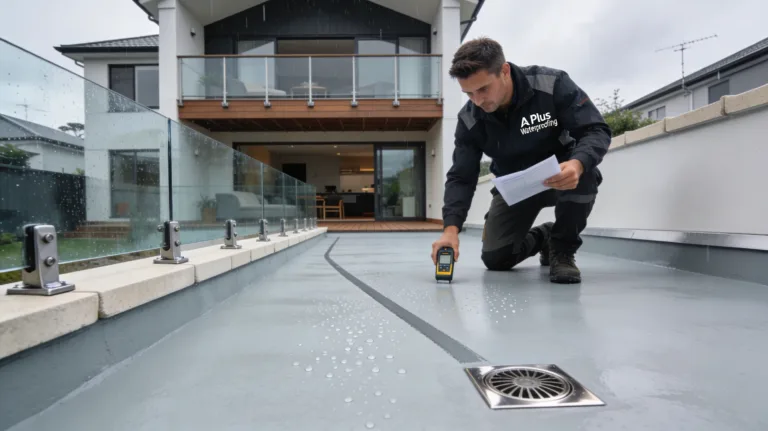
How a Compliant Deck Waterproofing System Works
A compliant deck waterproofing build-up starts with a well-designed structure that provides adequate falls to drains or gutters so water can’t pond on the surface. Under E2/AS1, membrane decks must have at least a 1.5 degree fall, though industry guidance often recommends steeper slopes to improve runoff and reduce risk. Over the structural framing, plywood or other approved substrates are installed, fixed, and prepared following a strict checklist: sheets glued and screwed, edges chamfered, joints sanded, and moisture content checked before waterproofing. Once the substrate is signed off, a compatible membrane – often butyl/EPDM or another BRANZ-appraised system – is applied by trained installers, with careful attention to edges, upstands, and penetrations. Finally, any overlay (tiles, timber decking, coatings) must be compatible with the membrane and designed so it doesn’t block drainage or damage the waterproof layer.
Common Causes of Deck Leaks
Many of the leaking decks seen around Auckland share a few recurring issues, most of which trace back to design, detailing, or installation shortcuts. A frequent problem is insufficient slope, which allows water to sit on the deck surface and slowly work its way through laps, pinholes, or poorly sealed junctions. Another typical failure is inadequate substrate preparation – loose fixings, un-sanded joints, or wet plywood can all move or break down under the membrane, leading to cracks or blisters. Poor detailing around balustrade posts, door thresholds, outlets, and internal gutters is another major leak source, especially when builders improvise rather than follow tested details and product literature. DIY coatings or “quick fix” paints applied over failing membranes rarely address the underlying problem and can actually make diagnosis and repair more difficult later.
Why Work With a Specialist Like A Plus Group NZ
Getting deck waterproofing right requires more than just rolling out a membrane – it demands understanding of NZ Building Code E2/AS1, council requirements, and product-specific installation methods. A Plus Group NZ focuses on waterproofing systems for Auckland conditions, bringing experience from basements, flat roofs, and external membranes across different substrates. As specialist applicators, they can recommend suitable systems for each project – from trafficable membranes under tiles to exposed finishes – and ensure they’re installed to manufacturer guidelines so warranties remain valid. The team can also work directly with builders, architects, and homeowners to coordinate substrate preparation, outlet placement, and edge details before any membrane work starts. This joined-up approach reduces the risk of leaks, avoids costly rework, and delivers a deck that performs in real Auckland weather, not just on paper.
When to Repair, Recoat, or Rebuild Your Deck
Knowing when to call in a specialist can save thousands compared with waiting until major damage appears below the deck. Warning signs include soft spots in the deck surface, ponding water that doesn’t drain after rain, cracks or splits in coatings, and staining or mould on ceilings or walls underneath. In some cases, targeted repairs or re-detailing around outlets and junctions may be enough if the main membrane is still sound and within its expected service life. For older decks, or where there has been long-term water ingress, stripping back to the substrate and installing a new, fully compliant membrane system will usually be the most reliable solution. A Plus Group NZ can inspect the deck, identify the cause of the problem, and recommend whether repair, overlay, or complete replacement is the best long-term option for the property.