What is TPO roof waterproofing?
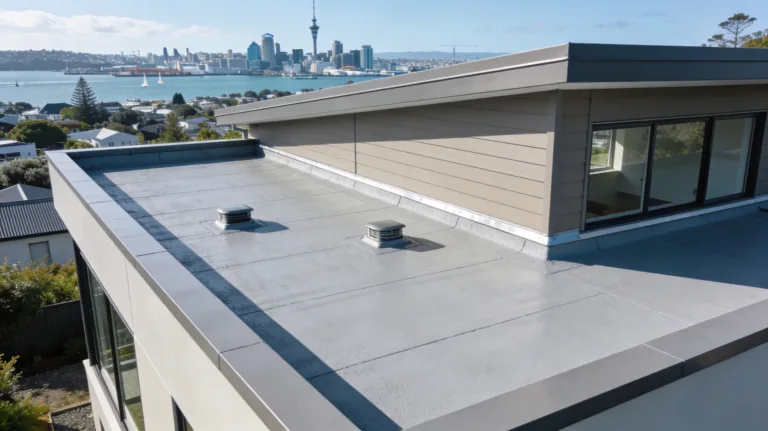
TPO roof waterproofing uses a single-ply thermoplastic membrane, usually reinforced with polyester or fibreglass, to keep flat and low-slope roofs watertight. The sheets are rolled out over the prepared roof, then seams and details are fused together with hot air to form a continuous waterproof skin. Because the membrane is synthetic and thermoplastic, it can be heat-welded, repaired, and detailed cleanly around outlets, parapets, and penetrations. This makes it a strong option for both new builds and re-roofs where reliable waterproofing is non‑negotiable.
On Auckland homes and commercial buildings, TPO is most often used on flat roofs, decks over habitable spaces, plant platforms, and box gutters where ponding and UV exposure quickly break down traditional coatings. Its combination of flexibility and strength allows it to accommodate typical building movement without splitting or lifting.
Why TPO suits Auckland and NZ weather
New Zealand roofs have to tolerate strong UV, wind-driven rain, temperature swings, and in coastal areas, salt-laden air. TPO membranes are engineered to resist UV radiation, ozone, and atmospheric pollutants, minimising shrinkage, cracking, and embrittlement over time. This translates into fewer age-related leaks and a longer service life when compared with many older membrane technologies.
The bright, reflective TPO surface helps reduce heat absorption into the building, which is particularly useful on exposed Auckland flat roofs that can otherwise become heat sinks in summer. Lower surface temperatures can support interior comfort and reduce cooling demand in suitable buildings. At the same time, TPO remains flexible in cooler, wet winters, maintaining watertightness through seasonal movement and heavy rainfall events.
Key benefits of TPO roof membranes
TPO delivers a mix of performance, cost-effectiveness, and practicality that suits modern NZ construction. Some of the core advantages include:
-
Strong waterproofing performance with heat-welded seams that form a monolithic barrier against water ingress.
-
High resistance to UV, ozone, and weathering, reducing the risk of premature failure.
-
Reflective, light-coloured finish that contributes to energy efficiency and improved roof temperature control.
-
Lightweight system, suitable for a wide range of substrates and retrofits without major structural upgrades.
-
Puncture resistance and dimensional stability, especially in reinforced products designed for foot traffic and deck areas.
Because TPO can be altered and re-welded after installation, detailing adjustments, repairs, or future penetrations are simpler than with many traditional membranes. This gives building owners flexibility over the life of the roof, for example when adding services, solar arrays, or new balustrade posts.
How a TPO roof is installed
A quality TPO roof is as much about the installation process as it is about the membrane itself. While specific details vary by project, a typical sequence includes:
-
Substrate assessment and preparation – ensuring the roof or deck structure is sound, dry, and correctly sloped toward drains or scuppers.
-
Installation of vapour barriers and insulation (if specified) to meet thermal and moisture-performance targets.
-
Laying and fixing TPO sheets, either mechanically, adhered, or ballasted depending on design and wind conditions.
-
Hot-air welding of all laps, seams, and terminations to create a continuous waterproof layer.
-
Forming upstands, internal/external corners, outlets, and penetrations with prefabricated or site-formed TPO accessories.
-
Final QA checks, including seam testing and visual inspection, often linked to the manufacturer’s warranty requirements.
Manufacturers such as Viking Roofspec, GAF, Nuraply, and ARDEX/Elevate require certified applicators for their TPO systems, which protects warranty validity and ensures installation meets tested details. Engaging trained installers also reduces the risk of common issues like poor terminations, inadequate drainage design, or incompatible substrates.
Where TPO makes sense on your project
TPO is a strong candidate wherever you need robust, low-maintenance waterproofing on flat or low-slope areas. Typical use cases around Auckland and wider NZ include:
-
Residential flat roofs and parapet roofs that demand clean lines and long-term performance.
-
Decks over living spaces, where leaks can quickly cause expensive interior and structural damage.
-
Commercial and industrial roofs that benefit from energy efficiency, durability, and easy access for services.
-
Re-roofing projects where you want to upgrade from ageing torch-on, butynol, or failing coatings to a modern system.
Because TPO systems are modular and available in wide sheet widths, they suit both compact residential roofs and large commercial roofscapes, often with fewer laps and reduced installation time. When designed correctly, they integrate cleanly with gutters, skylights, claddings, and floating deck systems.
Choosing A Plus Waterproofing for TPO roof waterproofing
For property owners, the real value of TPO comes from pairing the right membrane with a design that respects NZ conditions and local consent requirements. A Plus Waterproofing specialises in roof and deck waterproofing in Auckland and has existing content and expertise around TPO membranes for flat roofs.
Working with a specialist team means you get:
-
Advice on whether TPO is the best-fit membrane for your specific roof, compared with options like torch-on, PVC, or EPDM.
-
A system design aligned with manufacturer details and NZ weather conditions, not just a “one size fits all” approach.
-
Certified applicators using manufacturer-approved techniques and equipment on site.
-
Support with warranties, maintenance guidance, and future modifications over the life of the roof.
If you are planning a new flat roof, a deck over living space, or you are dealing with a leaking membrane roof, TPO is well worth considering as a durable, efficient upgrade. A Plus Waterproofing can assess your existing structure, recommend the most suitable TPO system, and deliver a professional installation that keeps water out and performance high for decades. Contact the team to discuss your roof and get tailored TPO waterproofing advice for your Auckland property.