Auckland Deck Waterproofing: What Homeowners Need to Know Before It’s Too Late
Auckland is hard on decks: heavy rain, salty coastal air, and big temperature swings all work together to break down waterproofing over time. When a deck sits over living space, a garage or a downstairs room, even a small leak can quickly turn into swollen timber, mould, stained ceilings and serious structural damage.
That’s why decks here need more than just a coat of paint or a “quick DIY seal”. A proper waterproofing system, installed by trained applicators, is the difference between a dry home and an expensive rebuild.
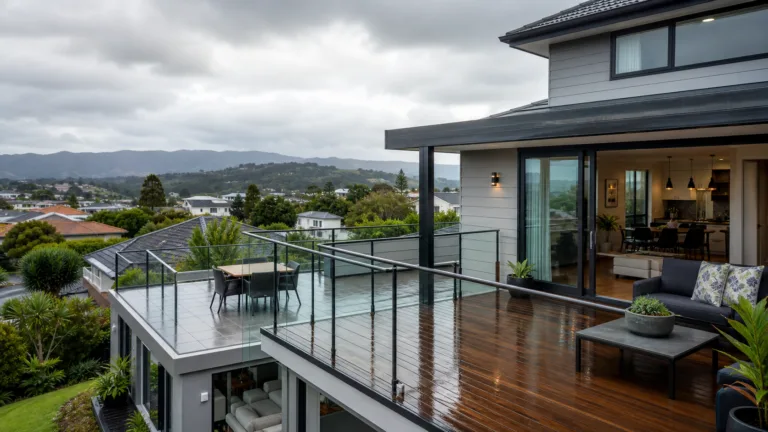
Common causes of leaking decks in Auckland
From what we see on Auckland sites, most leaking decks come back to a few repeat problems.
-
-
Incorrect or tired waterproofing membranes
-
Poor substrate preparation and framing
-
Flat decks with no fall to drains
-
Bad edge, balustrade and door threshold detailing
-
DIY “band-aid” fixes over existing problems
-
1. The wrong membrane – or one past its life
Many older decks were waterproofed with liquid coatings or fibreglass directly over plywood. As the timber structure moves with Auckland’s climate, those rigid coatings often crack at joints and edges, letting water track into the substrate and down into the rooms below.
Modern systems for attached decks over living spaces usually use BRANZ‑appraised or council‑approved sheet membranes designed specifically for New Zealand conditions. These are flexible, durable and detailed to handle movement, UV and ongoing foot traffic when correctly installed.
2. Substrate and framing issues
A waterproofing system is only as good as the surface it’s sitting on. Typical issues we find include:
-
-
Wrong plywood grade or thickness
-
Tongue-and-groove sheets used where they shouldn’t be
-
Joists too far apart and sheet edges not fully supported
-
Swollen, wet or damaged ply from being left exposed to the weather
-
Best practice in Auckland is to use a minimum 17 mm CCA H3.2 structural plywood, fully supported on framing at maximum 400 mm centres, with all sheet edges blocked and properly fixed. Moisture levels should be checked and kept under about 18% before any membrane goes down.
3. No fall, ponding water and blocked outlets
Flat decks are a common leak trigger. If water can’t run to a drain or gutter, it sits on the surface and slowly looks for a way into the building. Over time this leads to:
-
-
Ponding around outlets and doorways
-
Accelerated membrane wear
-
Water tracking under tiles or overlays
-
New Zealand Building Code guidance requires minimum falls so water drains properly from waterproof decks. Good design builds those falls into the structure from day one, and good installation makes sure the surface actually follows those falls all the way to a properly detailed outlet.
4. Weak points: edges, balustrades and door thresholds
Most leaks don’t start in the middle of the deck – they start at the edges. Typical trouble spots include:
-
-
Balustrade posts bolted straight through the membrane
-
Membrane stopping short of door thresholds
-
Poorly formed upstands and corners
-
Incompatible metal flashings or outlets
-
Getting these details right is critical for long‑term performance and for council sign‑off. That means coordinating with the builder, joiner and balustrade fabricator so the membrane can be dressed continuously up behind doors and over edges before the finishing work goes back on.
5. DIY repairs and short‑term fixes
We often see decks that have been “repaired” several times with DIY products, sealants or paint‑on membranes from the hardware store. They may slow a leak for a few months, but they rarely survive a full Auckland winter and can make proper remediation harder later.
Because waterproof decks are part of the building envelope, New Zealand guidance treats them as a specialist system that should be designed and installed by trained applicators using approved products.
What a professional deck waterproofing system includes
When we waterproof an Auckland deck, we are looking at much more than just the surface. A complete system typically includes:
-
-
Assessment and moisture check – Inspect existing substrates, check falls, look for hidden damage and test moisture where needed.
-
Substrate repair or replacement – Bring the structure up to spec with correct plywood, framing support, fixings and edge detailing.
-
Membrane selection and installation – Install an appropriate sheet membrane system that is BRANZ‑appraised or council‑approved for decks.
-
Drainage and outlets – Form proper falls, specify compatible outlets and clamped grates, and make sure nothing can trap water.
-
Finishes and overlays – Coordinate tiles, floating decks or coatings so they protect – not damage – the membrane.
-
Documentation and warranty – Provide photos, checklists and manufacturer documentation to support compliance and warranty conditions.
-
Done properly, you get a deck that drains well, feels solid underfoot and protects the spaces below for many years.
New deck vs leaking existing deck
The solution for a new build in Auckland is different from a leak repair on an existing home.
-
New decks / renovations
-
Design falls, outlets and thresholds correctly from the start.
-
Use code‑compliant materials and get the structure ready for an approved membrane system.
-
Plan the membrane installation before doors, flashings and balustrades are fully fixed off.
-
-
Existing leaking decks
-
Investigate to find the real cause: substrate decay, failed membrane, bad detailing or all three.
-
Strip back as needed to sound structure, replace damaged plywood, correct the falls and detailing.
-
Install a new membrane system and tie it into the rest of the building envelope.
-
Either way, the aim is the same: a durable, low‑maintenance deck that can handle Auckland’s climate without putting your home at risk.
Why choose A Plus Waterproofing for your Auckland deck
A Plus Waterproofing is a locally based Auckland waterproofing company focused on roofs, decks, gutters, basements and tanking. That day‑to‑day experience across different parts of the building envelope means we understand how your deck interacts with claddings, joinery and roofing – and what can go wrong when those connections are ignored.
When you engage A Plus Waterproofing for your deck, you get:
-
Local knowledge of Auckland conditions – Systems and detailing that are proven in our coastal, high‑rainfall environment.
-
Specialist deck waterproofing skills – Trained applicators experienced with modern sheet membrane systems for decks and roofs.
-
Clear communication on site – We work directly with homeowners, builders and other trades to coordinate timing and details so the membrane can be installed correctly the first time.
-
Free site visits and quotes across Auckland – We inspect the deck, talk through options and provide a clear, written quote before any work starts.
When should you call a deck waterproofing specialist?
If you are seeing any of these signs, it is time to get your deck checked by a specialist:
-
-
Staining, bubbling or mould on the ceiling or walls below the deck
-
Soft spots or movement in the deck surface
-
Cracks opening up at plywood joints, edges or around balustrade posts
-
Ponding water that stays on the deck 24 hours after rain
-
Previous “fixes” that have not lasted through winter
-
Catching a leak early can often be the difference between a straightforward membrane replacement and a full structural rebuild of the deck and surrounding areas.
How A Plus Waterproofing can help
If you are planning a new deck or dealing with a leak in an existing one, A Plus Waterproofing can help you choose the right system and get it installed properly. We take care of the full process – from assessment and substrate repairs through to membrane installation and detailing with other trades – so you can enjoy a dry, usable outdoor space with confidence.
To book a free site visit and quote for deck waterproofing anywhere in Auckland, contact A Plus Waterproofing on 027 210 1415 or via the contact form on aplusgroupnz.co.nz.