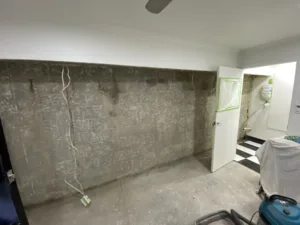
What Bituthene is
Bituthene 3000 and similar variants are factory‑made sheet membranes with controlled thickness, so you get consistent performance across the entire wall rather than thin or missed spots that can occur with brush‑on coatings. The bitumen‑rubber adhesive layer sticks to cured concrete, while the HDPE or polyethylene film provides toughness and tear resistance during backfilling.
These membranes are:
-
Self‑adhesive for quick application to primed concrete surfaces.
-
Flexible, with elongation capacity that helps accommodate minor shrinkage or settlement in the wall.
-
Chemically resistant to typical soil conditions and groundwater exposure.
-
Suitable for tanking retaining walls, basements, and other below‑grade structures where long‑term waterproofing is critical.
In New Zealand, Bituthene is widely supplied and used on foundations, basement walls, and retaining walls where proper tanking is required rather than basic damp‑proofing.
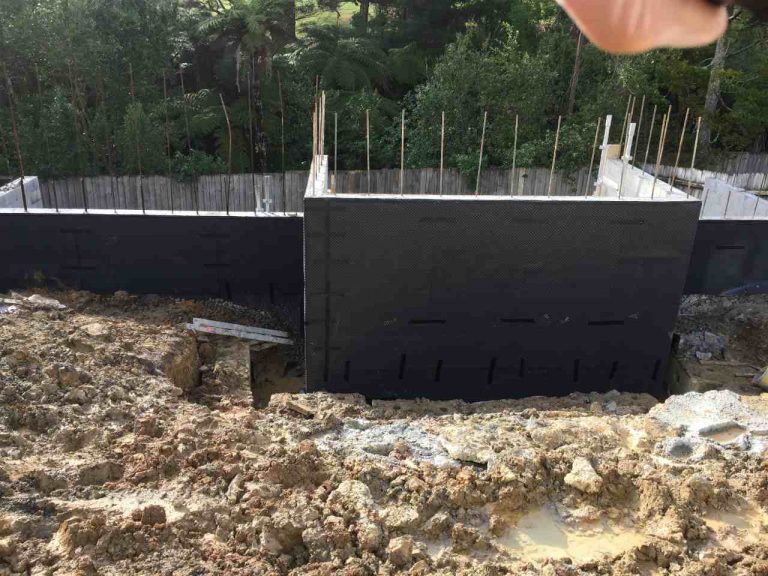
How Bituthene Waterproofing Is Installed on Retaining Walls
Getting a Bituthene system right is all about preparation, sequencing, and detail. A typical installation on a concrete retaining wall in Auckland involves several key steps.
-
Wall and Substrate Preparation
The concrete must be fully cured, structurally sound, and free from laitance, dust, oils, or sharp protrusions that could damage the membrane. Honeycombing, bugholes, and cracks are repaired so the wall provides a smooth, even surface for bonding the membrane. -
Priming the Concrete
Approved Bituthene primers are applied to the concrete to improve adhesion and help the self‑adhesive membrane grip firmly, even on slightly damp or “green” concrete (within the product’s limits). Using the correct primer is essential to avoid debonding when the backfill goes in and hydrostatic pressure builds up. -
Membrane Application
Sheets are rolled out onto the primed wall, starting from the low point and working upwards so laps shed water. Side and end laps are overlapped by the manufacturer’s specified amount and firmly rolled to create a continuous, watertight layer. Because thickness is controlled in the factory, the finished membrane offers consistent protection over the entire wall. -
Critical Details: Corners, Joints, and Penetrations
Inside and outside corners, footing‑to‑wall junctions, construction joints, and pipe penetrations are reinforced with additional strips or compatible liquid detailing compounds from the same system. This is where many retaining wall failures start, so professional attention to these details is essential. -
Drainage and Protection
Good Auckland retaining wall design always pairs waterproofing with drainage so water pressure never builds up behind the wall. Drainage composites, filter fabrics, or drainage metal are installed to move water down to perforated drains and away from the structure, while protection boards or drainage sheets shield the membrane from damage during backfilling. -
Backfilling Carefully
Backfill materials are placed in controlled layers, compacted properly, and kept free of sharp rocks or construction debris that might puncture the membrane. When the system is designed and installed correctly, the wall is effectively tanked from the outside and shielded from Auckland’s challenging ground moisture.
Compliance and Best Practice for NZ Conditions
New Zealand’s Building Code requires that walls in contact with the ground manage moisture so it does not cause dampness, decay, or damage to the building. Determinations have highlighted that simple damp‑proof films are not enough for retaining walls exposed to groundwater; instead, a properly designed tanking membrane with drainage is expected.
Bituthene systems, installed as part of a full retaining wall design including drainage and protection, provide the kind of robust, positive‑side waterproofing that aligns with these expectations. For Auckland, where hydrostatic pressure, clay soils, and unpredictable rain events are normal, this level of protection is especially important for both residential and commercial retaining walls.
When to Choose Bituthene for Your Retaining Wall
Bituthene is a strong option for:
-
New concrete retaining walls where you can access the outside face before backfilling.
-
Basements, planter walls, and foundation walls that sit below finished ground level.
-
Projects where long‑term protection and compliance are more important than lowest upfront cost.
Because one‑size‑fits‑all approaches don’t work for below‑grade waterproofing in Auckland, the best results come from a tailored system that considers wall height, soil type, drainage design, and expected water pressure.
A Plus Waterproofing works with homeowners, builders, and engineers to select suitable membranes like Bituthene, plan the sequencing around retaining wall construction, and oversee installation so the waterproofing performs as intended. If you are planning a new retaining wall or have issues with an existing one, a site visit and scoped waterproofing plan can prevent costly leaks and remedial works later on.